
FAQs - Frequently Asked Question

Your Tanzania Safari Questions, Answered
Planning the adventure of a lifetime to Tanzania can bring up a lot of questions. We’re here to help! As a local Tanzanian tour operator, we’ve guided countless travellers and know what’s on your mind.
Below, we’ve compiled answers to the most common questions we receive. If your question isn’t answered here, please don’t hesitate to contact us directly.
Planning & Booking Your Safari
A: We are a 100% locally owned and operated Tanzanian company. This means your journey is guided by true local experts who have an intimate knowledge of the parks, the wildlife, and the culture. We offer personalized, flexible itineraries, top-quality safari vehicles, and a deep commitment to sustainable tourism that supports our local communities. With us, you’re not just a tourist; you’re our guest.
A: It’s simple!
- Inquire: Browse our sample itineraries or send us a message through our contact form with your travel dates, group size, and interests.
- Customize: Our safari expert will work with you to craft the perfect itinerary that matches your budget and dreams.
- Confirm: Once you are 100% happy with the plan, we’ll send you a booking confirmation and invoice for the deposit (typically 30%).
- Prepare: We’ll provide you with all the pre-departure information you need. The final balance is usually due 60 days before your arrival.
A: Our safari packages are designed to be virtually all-inclusive. Typically, this includes:
- All accommodation as per the itinerary
- All meals on safari (breakfast, lunch, dinner)
- Unlimited bottled drinking water in the safari vehicle
- Private 4×4 Land Cruiser with a pop-up roof for optimal game viewing
- The services of a professional, English-speaking safari guide
- All national park and conservation area fees
- Airport transfers (from/to Kilimanjaro International Airport – JRO)
A: The following are typically not included:
- International flights to/from Tanzania
- Tanzanian visa
- Travel and medical insurance (this is mandatory)
- Tips for your guide and lodge/camp staff
- Alcoholic and soft drinks at accommodations
- Optional activities like hot air balloon safaris or Maasai village visits
A: Absolutely! We specialize in creating seamless Tanzanian adventures. We can easily arrange your safari to be combined with a relaxing beach holiday in Zanzibar or a challenging climb up Mount Kilimanjaro, including all necessary domestic flights and transfers.
Health & Safety
A: Yes, Tanzania is considered one of the safest and most stable countries in East Africa. Tourism is a vital part of our economy, and the Tanzanian people are famously warm and welcoming. Like anywhere in the world, it’s wise to take standard precautions, such as keeping valuables secure and being aware of your surroundings in busy towns. On safari, your expert guide is your guardian, ensuring your safety at all times.
A: We strongly advise you to consult your doctor or a travel clinic at least 6-8 weeks before your departure for the most up-to-date medical advice. They may recommend vaccinations for Tetanus, Hepatitis A & B, and Typhoid. Proof of a Yellow Fever vaccination is required if you are arriving from a country with a risk of yellow fever transmission. Malaria is present in Tanzania, and preventative medication (prophylaxis) is highly recommended.
A: Your safety is our top priority. Our fleet consists of well-maintained, custom-fitted 4×4 Toyota Land Cruisers. They are equipped with first-aid kits, radio communication systems for contact with our office and park authorities, and are driven by professional guides trained in safe driving and wildlife behaviour.
A: Yes, comprehensive travel and medical insurance is a mandatory condition of booking with African Pishon Safaris. Please ensure your policy covers medical expenses, emergency evacuation (including air ambulance), trip cancellation, and loss of luggage or personal belongings.
On Safari: The Experience
A: A typical day starts with an early breakfast before heading out for a morning game drive when animals are most active. You might enjoy a picnic lunch in the heart of the bush or return to your lodge for a hot meal and a short rest. In the afternoon, you’ll embark on another game drive, exploring a different area. You’ll return to your camp or lodge around sunset for a relaxing evening, dinner, and a good night’s sleep, listening to the sounds of Africa.
A:
- Safari Lodges are permanent structures, similar to hotels, with solid walls, private en-suite bathrooms, and often amenities like swimming pools and restaurants.
- Tented Camps offer a more immersive bush experience. These are luxury canvas tents with solid floors, proper beds, and private en-suite bathrooms with flushing toilets and hot showers. They allow you to feel closer to nature without sacrificing comfort.
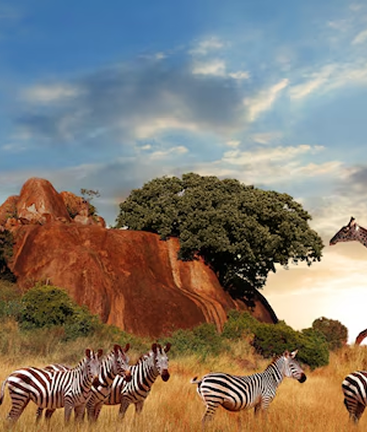
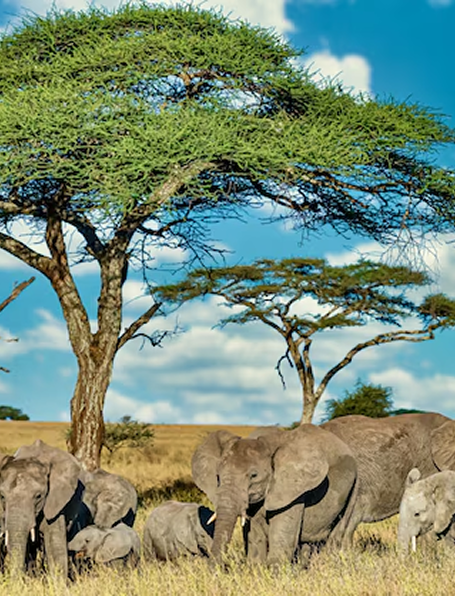
A: Tanzania offers some of the most spectacular wildlife viewing on the planet! You have an excellent chance of seeing the “Big Five” (Lion, Leopard, Elephant, Buffalo, and Rhino). You’ll also encounter vast herds of wildebeest and zebra (especially during the Great Migration), giraffes, hippos, cheetahs, hyenas, and an incredible diversity of birdlife. While we can’t guarantee sightings of specific animals, our expert guides know the best places to find them.
Money & Tipping
A: The US Dollar (USD) is the most widely accepted foreign currency for tourism in Tanzania. We recommend bringing cash in various denominations for tips and small purchases. Important: Please ensure your US Dollar bills are printed in 2009 or later, as older bills are often not accepted. The local currency is the Tanzanian Shilling (TZS), which is useful for small items at local markets.
A: Tipping is not mandatory, but it is a customary and deeply appreciated way of showing gratitude for excellent service. The staff and guides work very hard to make your trip memorable. Here are some general guidelines:
- Safari Guide: $15 – $20 USD per person, per day.
- Lodge/Camp Staff: Place a tip in the communal “tip box” upon checkout. We suggest $10 – $15 USD per person, per day.
- Porters/Hotel Staff: $1 – $2 USD per bag/service.
Packing & Practicalities
A: Pack light and use a soft-sided duffel bag, as luggage space in safari vehicles and on small aircraft is limited.
- Clothing: Lightweight clothes in neutral colours (khaki, green, brown). Avoid bright colours, white (gets dirty fast), and dark blue/black (attracts tsetse flies). Pack layers: t-shirts, long-sleeved shirts, a warm fleece or jacket for cool mornings and evenings.
- Footwear: Comfortable walking shoes or trainers.
- Essentials: Sun hat, sunglasses, high-SPF sunscreen, insect repellent (with DEET).
- Gear: Camera with extra batteries/memory cards, binoculars (very important!), a small flashlight or headlamp.
- Personal: Prescription medications, basic first-aid kit, toiletries.
A: Yes. On safari vehicles, space is limited, so we recommend soft-sided bags. If your itinerary includes an internal flight (e.g., to the Serengeti or Zanzibar), there is a strict luggage limit of 15 kg (33 lbs) per person, in a soft bag.
A: Tanzania uses the British-style Type G plug with three rectangular prongs. The voltage is 230V. Most lodges and camps have electricity, but it may be run on a generator with limited hours (e.g., only in the mornings and evenings). We recommend bringing a portable power bank to keep your devices charged.
About Tanzania
A: Tanzania is a fantastic year-round destination!
- June – October (Dry Season): This is the peak season. Wildlife is easier to spot as animals gather around water sources and the vegetation is less dense.
- November – May (Green Season): The landscape is lush and beautiful, there are fewer crowds, and it’s the best time for birdwatching. The Great Migration calving season occurs from January to March in the Southern Serengeti, which is an incredible spectacle. The main rainy periods are typically April and May.
A: Most foreign nationals require a visa to enter Tanzania. It is highly recommended to apply for an e-visa online through the official Tanzania Immigration Services website well in advance of your travel. Please check the specific requirements for your nationality.
A: The official languages are Swahili and English. English is widely spoken in the tourism industry, so you will have no problem communicating with your guide, and at all hotels and lodges. Learning a few Swahili words like “Jambo” (Hello), “Asante” (Thank you), and “Karibu” (Welcome) is always appreciated!
Ready to Start Your Adventure?
Have more questions, or are you ready to turn your dream safari into a reality? Our team is standing by to help you plan every detail.