
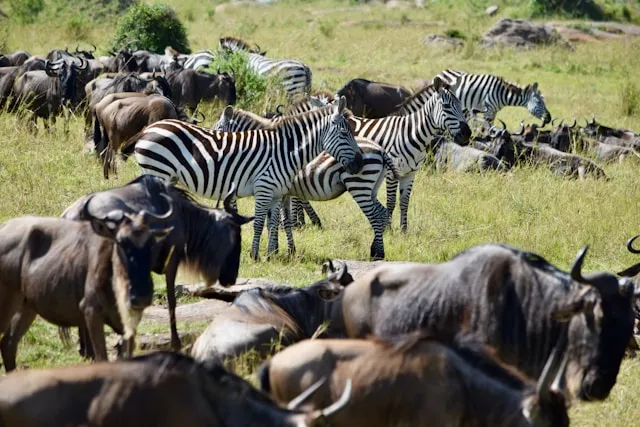
Witness
THE GREAT MIGRATION
Over a million wildebeest thundering across the Serengeti - the greatest wildlife spectacle on Earth.
Nature's greatest
performance.
The Great Migration is the largest overland wildlife movement on the planet. Each year, over 1.5 million wildebeest, 400,000 zebra, and 200,000 gazelle embark on a 1,200-kilometer circular journey across the Serengeti-Mara ecosystem, driven by the ancient rhythm of the rains.
This isn't just a migration - it's a life-or-death odyssey. Predators lurk at every turn. Rivers teem with crocodiles. Calves must learn to walk within minutes. It is raw, unfiltered nature at its most dramatic, and it has been playing out here for millions of years.
1.5M+
Wildebeest
400K
Zebra
1,200km
Annual Journey
2M+
Years Old
Following the
ancient path.
Calving Season
Southern Serengeti / Ndutu
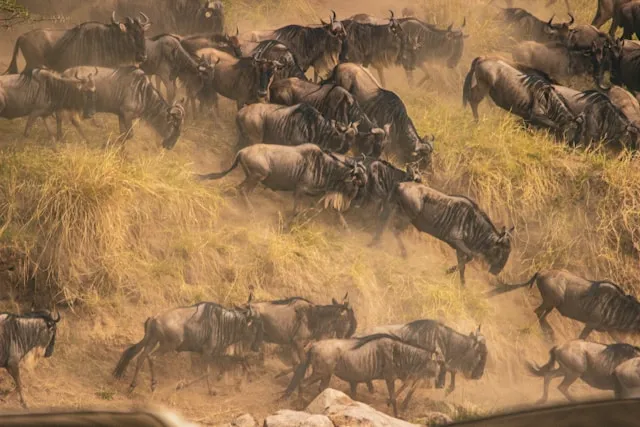
The herds gather on the short-grass plains of the southern Serengeti and Ngorongoro Conservation Area. From late January, half a million calves are born within a three-week window. This is prime predator territory - lions, cheetahs, and hyenas patrol constantly.
The Northward Trek
Central & Western Serengeti
As the long rains deplete the southern plains, the herds begin their march north. They gather around the Moru Kopjes and Seronera Valley before pushing into the western corridor. This is a period of regrouping and grazing.
Grumeti Crossings
Western Corridor / Grumeti River
The first major obstacle: the Grumeti River. Though less dramatic than the Mara, the Grumeti has its own dangers - massive Nile crocodiles lie in wait. The herds mass on the banks before surging across.
Mara River Crossings
Northern Serengeti / Maasai Mara
The crescendo of the migration. The herds gather at the Mara River, a mile-wide barrier teeming with crocodiles. The crossings are chaotic, violent, and breathtaking. This is what you came to see.
Return South
Eastern Serengeti / Lobo
The short rains call the herds back south. They filter through the eastern woodlands of Lobo and the open plains of the southern Serengeti, completing the 1,200km circuit.
The crossing
of faith.
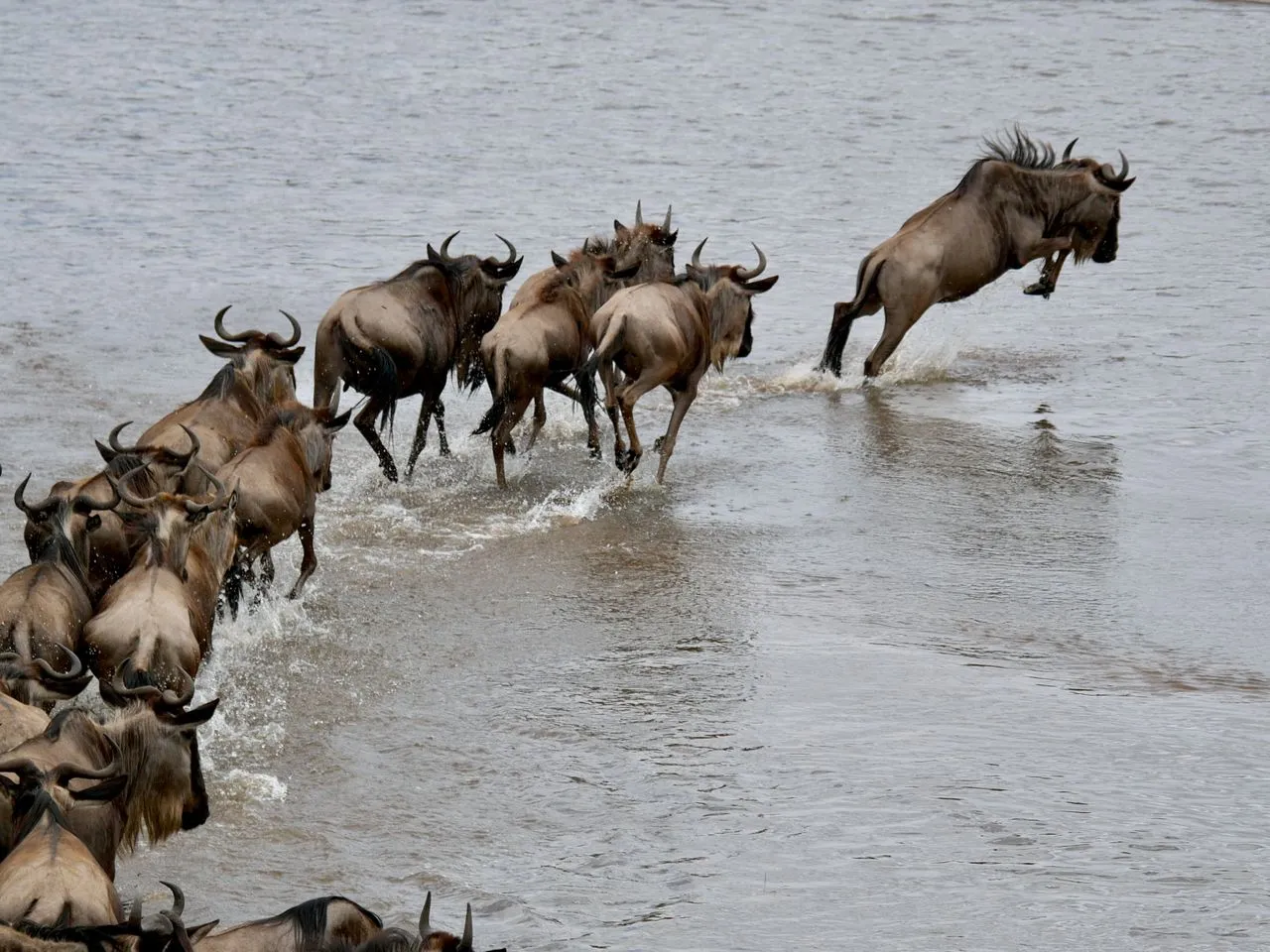
There is nothing in nature that compares to the river crossings. Thousands of wildebeest gather on the banks, kicking up dust, calling to one another. The crocodiles wait motionless in the brown water. And then, without warning, a single wildebeest plunges in - and the rest follow.
The Grumeti River (June–July) and the Mara River (August–October) are the two great obstacles. Our guides position you at the most active crossing points, often before the herds arrive, so you witness the tension build and the final desperate surge.
Choose your
season.
Every month offers a different window into the migration. Here's what to expect throughout the year.
| Month | Season | Where Are the Herds | Calving | Rating |
|---|---|---|---|---|
| Jan | Short dry | Southern Serengeti (Ndutu) | ✓ | |
| Feb | Short dry | Southern Serengeti (Ndutu) | ✓ | |
| Mar | Long rains start | Southern / Central moving north | - | |
| Apr | Long rains | Central / Western corridor | - | |
| May | Long rains end | Central Serengeti (Moru Kopjes) | - | |
| Jun | Dry season | Western corridor / Grumeti | - | |
| Jul | Dry season | Grumeti River crossings | - | |
| Aug | Dry season | Northern Serengeti (Kogatende) | - | |
| Sep | Dry season | Northern Serengeti / Mara River | - | |
| Oct | Short rains start | Northern Serengeti / Lobo | - | |
| Nov | Short rains | Eastern / Southern Serengeti | - | |
| Dec | Short rains end | Southern Serengeti (Ndutu) | ✓ |
Sleep where the
wilderness moves.
Mobile Camps
These seasonal camps move with the herds, placing you at the heart of the action. Lightweight canvas suites, gourmet dining under the stars, and the sound of the bush as your lullaby.
- Moves with the herds
- Intimate - 6-10 tents
- Bucket showers & bush toilets
- Full-board & sundowners
Permanent Lodges
Located in prime wildlife areas with permanent structures, pools, and en-suite bathrooms. Ideal for travelers who want comfort without compromising on location.
- En-suite bathrooms
- Swimming pools
- Wi-Fi available
- Family-friendly
Private Camps
Exclusive-use camps for families or small groups. Private chef, vehicle, and guide. The ultimate safari experience tailored entirely to your rhythm.
- Exclusive-use only
- Private guide & vehicle
- Custom itinerary
- Fine dining
Ready to witness
the migration?
Browse our migration-focused safari packages or speak with a specialist to design your own.
Frequently asked
questions.
What is the best time to see the Great Migration?+
July through October offers the most dramatic river crossings, but the migration is a year-round spectacle. December–March is calving season in the south, ideal for predator action and newborn calves.
Can I see the river crossings?+
Yes - the Grumeti crossings (June–July) and Mara River crossings (August–October) are the most iconic. Our guides position you at prime crossing points with minimal crowds.
How long should my safari be?+
We recommend a minimum of 5–7 days for a migration-focused safari. This gives you enough time to track the herds, witness crossings, and explore the diverse Serengeti ecosystems.
Is the migration visible year-round?+
Absolutely. The herds are always moving somewhere in the Serengeti ecosystem. Each season offers a unique perspective - from calving in the south to river crossings in the north.
What should I pack for a migration safari?+
Neutral-colored clothing, a warm jacket for early morning game drives, sturdy walking shoes, binoculars, a camera with zoom lens, sunscreen, and a sense of wonder.
Are the river crossings guaranteed?+
Nature is unpredictable, and that's the magic. While July–October offers the highest概率 of crossings, the herds follow ancient instincts. Our guides use real-time tracking to maximize your chances.
Can families with children join?+
Yes. We offer family-friendly migration safaris with private vehicles, flexible schedules, and age-appropriate activities. Children aged 6+ are welcome.